




Two people usually land on this page: a student past their first year, now free to decide whether a campus plan is worth carrying at all, and a parent weighing what that plan actually buys. At UVA, the honest answer comes down to one thing: how the student really eats.
This is a written comparison of UVA Dine and Elevate Meal Plan for UVA students who are no longer required to carry a campus block. The numbers come from official school sources, cited at the bottom. Where the dining hall is the better choice, we say so. Where it is not, we say that too.
What the campus plan actually costs
UVA Dine publishes four undergraduate plans per semester: All Access at $3,670, Block 160 at $2,190, Block 100 at $1,600, and Block 50 at $1,060. All blocks include $300 Dining Dollars per semester; All Access includes $150. First-year students are required to carry All Access for both semesters. Upperclassmen, apartment residents, and off-Grounds students can choose any of the block plans. [1]
| Plan | Price |
|---|---|
All Access (required for first-years) Unlimited dining hall access, $150 Dining Dollars per semester, up to 2 meal exchanges per day, 10 guest swipes per semester. Billed at $7,340 for the academic year. | $3,670 / semester |
Block 160 + $300 Dining Dollars 160 meal swipes per semester, $300 Dining Dollars, up to 10 meal exchanges per day. Common upperclassman choice for students still eating on Grounds often. About $11.81 per meal after subtracting $300 Dining Dollars. | $2,190 / semester |
Block 100 + $300 Dining Dollars 100 meal swipes per semester plus $300 Dining Dollars. Aimed at second-year and apartment students who cook more often. About $13.00 per meal after subtracting $300 Dining Dollars. | $1,600 / semester |
Block 50 + $300 Dining Dollars Smallest UVA block. 50 meal swipes plus $300 Dining Dollars, for students who primarily cook for themselves but want occasional meals on Grounds. About $15.20 per meal after subtracting $300 Dining Dollars. | $1,060 / semester |
Dining hall door rate Published pre-tax door rates for the three main all-you-care-to-eat dining halls, useful for one-off meals without a plan. | $11.25 breakfast; $16.25 brunch/lunch/dinner |
The headline price is not the only number that matters. Block 160 + $300 Dining Dollars works out to about $11.81 per meal after subtracting $300 Dining Dollars. That figure assumes the student uses every swipe. The other published blocks work the same way: per-meal cost rises with smaller blocks, and rises again with every unused swipe. Skip twenty meals on any plan and the effective price climbs further, with no refund for what was not eaten.
What happens when meals go unused
Effective per-meal cost on the Block 160 + $300 Dining Dollars, at different utilization rates. Dining dollars ($300) subtracted from the plan price first.
| Meals actually eaten | Effective price per meal |
|---|---|
| 160 of 160(100% used) | $11.81 |
| 128 of 160(80% used) | $14.77 |
| 96 of 160(60% used) | $19.69 |
| 64 of 160(40% used) | $29.53 |
The headline rate is a best-case scenario. Drop to 80 percent use, which is not unusual once finals week, long weekends home, study abroad applications, and the occasional Tuesday dinner at a friend’s apartment add up, and the effective cost jumps about 25 percent. At 60 percent use, the cost is more than half again the headline number. At 40 percent, it doubles. None of that money refunds.
Elevate has no equivalent of this table. The price per credit is set at purchase, and a credit only pays once the student spends it on an order. Unused credits sit and wait for next semester. Unused credits are refundable for 100 days after the first order. The per-meal cost cannot escalate, because the family is not pre-paying for meals the student might not eat.
How Elevate works, and how it got built
Elevate works differently from a swipe-based meal plan. Here is the full mechanic, in four steps.
One, buy a pack of credits. Parents and students can both buy. Packs are sized from small to large, so the first purchase does not need to cover a whole year. Elevate provides an itemized receipt after purchase for 529 reimbursement.
Two, order in the Elevate app. The app shows every partner restaurant in Charlottesville, with menus and the credit cost shown before checkout. Pickup is the default. Delivery is available where the restaurant offers it. No card swipe at the counter, no separate tab.
Three, member deals stack on top. Elevate runs rotating specials at participating restaurants. Free sides, BOGOs, and weekly promos that only members see in the app. Non-members ordering off the regular menu at the same restaurant pay the same retail price they always would.
Four, unused credits roll forward. Anything not spent this semester rolls to the next, and the one after, all the way to graduation. Unused credits are refundable for 100 days after the first order. After 100 days, unused credits are no longer refundable, but they continue to roll over until graduation.
Current Charlottesville pricing is $10.12 to $10.62 per credit plus tax. 105 credits are $10.35 per credit plus tax. Advertised per-credit rates are for ACH/bank payment. [5] There is no annual contract and no auto-renewal. Families pay for credits the student actually uses.
The reason Elevate exists, in case it matters: two UVA students built the first version of it about a decade ago, after the same frustration this guide is built around. Dining hall meals that ran out. Swipes that expired in May. A Corner full of restaurants their meal plan would not pay for. The first version was a workaround for a specific campus problem. Ten years and more than two million meals later, the same idea runs across four campuses, including UVA. More on the founders.
When and where the student can eat
On the campus side: UVA posts location-specific standard hours. O'Hill is listed with weekday breakfast through late night and weekend service, while Runk's standard dining hall hours focus on dinner plus weekend brunch. [2]
On Elevate: Elevate availability follows partner restaurants around the Corner and Charlottesville, so students can order around class, work, and late study schedules when restaurants are open. The current UVA list runs to 66 partner restaurants across Charlottesville, each with its own hours.
The practical difference shows up in the corners of a normal week: a 9 p.m. craving after the library closes, a Sunday morning when the dining hall opens late, fall break weekends, the run-up to finals, the random Tuesday when the student just does not want to walk back to a dining hall. Campus dining is built around a meal schedule. Elevate is built around restaurants’ schedules.
What is actually on the menu
UVA Dine includes 30+ on-Grounds locations, three all-you-care-to-eat dining halls, meal exchange, Dining Dollars, reusable to-go boxes, allergen-friendly True Balance stations, and meal-plan member events.
What dining halls do well, and dismissing this would be dishonest: allergen stations, registered-dietitian support, kosher and vegan accommodations, and the simple fact that a residence-hall student can walk downstairs and eat. None of that is trivial. It matters most in first year, before a student knows the town. By the second or third year, when the walk-downstairs convenience is gone and the stations feel repetitive, those advantages count for less.
Elevate gives UVA students restaurant meals from Corner and Charlottesville partners, visible credit pricing, order-ahead convenience, and member-only deals.
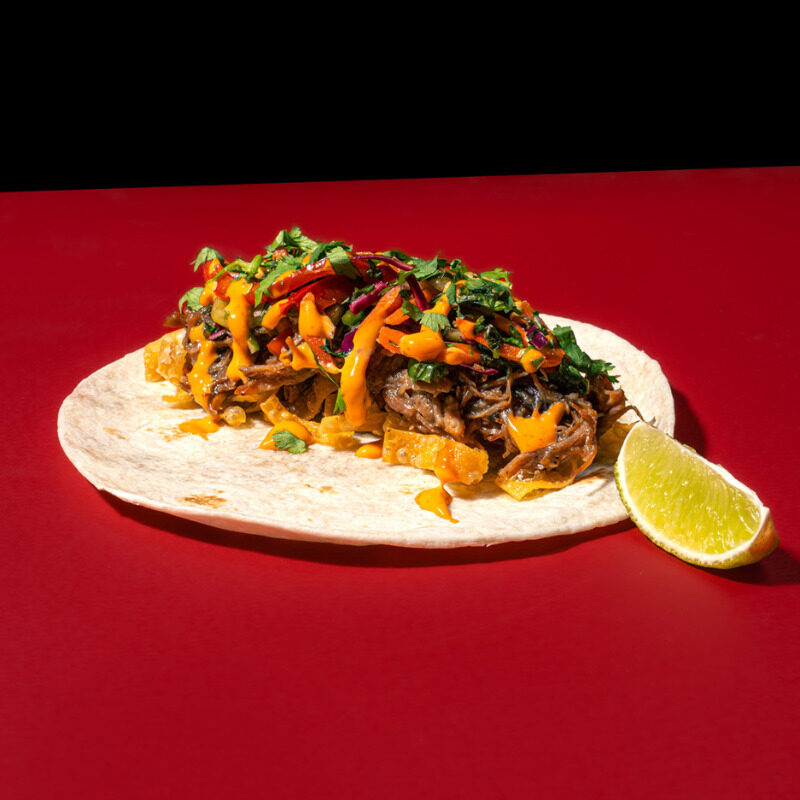
A few names from the current UVA partner list, to make it concrete: Asian Express, Corner Juice, Got Dumplings, Roots Natural Kitchen, and Torchy's Tacos. The full list runs to 66 restaurants and covers the usual Charlottesville mix: pizza and bowls, breakfast and brunch spots, sit-down restaurants, late night, and the rotating member specials that come with being on Elevate.
These are different categories of variety. A student who depends on campus allergen stations every day will keep wanting the dining hall. A student already tired of the same stations by midterms gets more out of restaurants. Many students want some of both.
Browse the full UVA restaurant list →
Flexibility, refunds, and rollover
UVA meal plans are annual contracts; meal swipes are campus-controlled and Dining Dollars have plan-year rules. Elevate credits roll forward until graduation.
This is where Elevate’s case is strongest. On UVA Dine, the Block 160 + $300 Dining Dollars works out to about $11.81 per meal after subtracting $300 Dining Dollars when fully used, and rises every time a swipe goes unused. Skipped meals during finals, illness, a long weekend at home, or a study-abroad semester do not refund.
Unused credits are refundable for 100 days after the first order. After 100 days, unused credits are no longer refundable, but they continue to roll over until graduation. There is no annual contract and no auto-renewal. Families pay for credits the student actually uses.
“The cheapest meal is the one they actually eat.”
Who each plan is for
UVA Dine is the right choice for first-years who must carry the campus plan; students who want unlimited dine-in access to O'Hill, Newcomb, and Runk; and students who need campus allergen-friendly stations.
Elevate is the right choice for upperclassmen who are not required to carry All Access anymore; students who would rather eat on the Corner than walk back to O'Hill; anyone ordering ahead between classes, after the gym, or during late-night studying; and students who want unused credits to roll forward until graduation.
These are not always exclusive. Some UVA students carry the smallest required campus plan alongside Elevate, getting residence-hall convenience without paying for swipes they will not use.
What to verify before buying
Campus dining rates and rules change between academic years. A few specifics worth confirming in UVA Dine’s portal before committing money:
- First-year UVA students are required to have All Access dining.
- Meal exchange is limited to one swipe per hour and up to two swipes per day at retail locations.
- Dining hall value depends on how often the student actually eats on Grounds.
For Elevate, the items to verify are shorter. That the restaurants the student will actually use are in the UVA partner list, and that the credit pack the family wants to buy matches the expected pace of use, listed on the pricing page.